The Story
A bountiful source of flavor-filled leaves
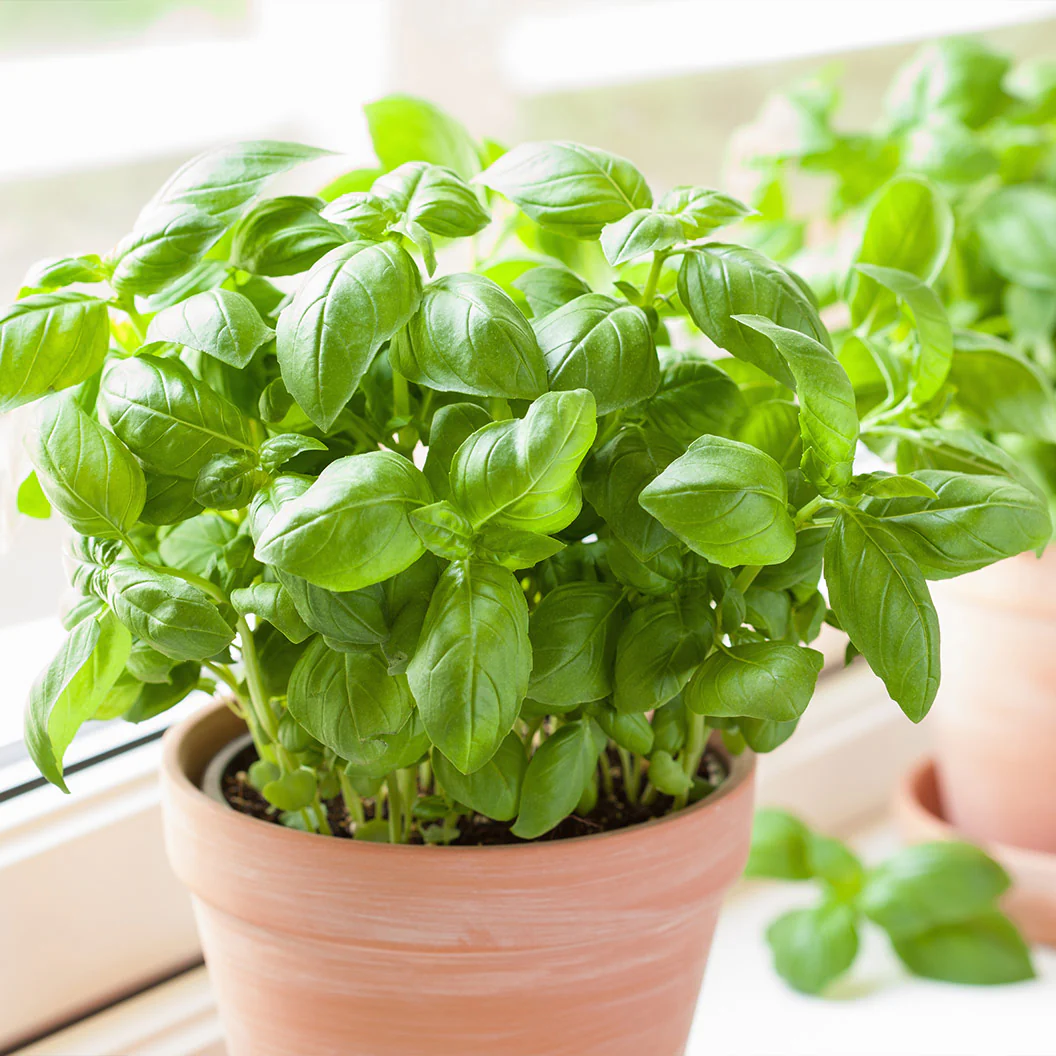
Organic sweet basil is a beloved herb that adds a rich, aromatic touch to your culinary creations. Known for its robust flavor, this plant yields an abundance of tender, flavorful leaves perfect for tossing into salads, blending into pesto, or topping your favorite pizza. This herb can thrive in various garden settings, whether in a sunny container on your patio or directly in the garden beds.
Planting organic sweet basil not only beautifies your landscape with its lush, green foliage but also attracts beneficial pollinators like bees and butterflies. It brings your meals to life with its unique flavor, making it a must-have for any home gardener who enjoys cooking with fresh ingredients. The ease of care and adaptability to different growing conditions make it an excellent choice for both novice and experienced gardeners alike. This product is Certified Organic by Clemson University.
Planting & Care
1. Planting: Choose a sunny spot with well-draining soil, and space your seedlings about 12 inches apart. Basil thrives in warm weather, so wait until after the last frost to plant. If using containers, select pots that allow for adequate drainage.
2. Watering: Basil has shallow roots which can dry out quickly, so be sure to keep the soil consistently moist but not soggy. Water your basil plant regularly, especially in hot weather. A good rule of thumb is to water when the top inch of the soil feels dry.
3. Pruning: To encourage bushy growth, pinch off the tops of the leaves as the plant starts to grow. Regularly removing flowers will also promote leaf production—prioritize flavor over blooms.
4. Fertilizing: Use a balanced organic fertilizer every four to six weeks during the growing season. Too much fertilizer can lead to excess leaf production at the expense of flavor, so moderate feeding is key.
Details & Craftsmanship
Every detail has been carefully considered to bring you the perfect product.
Details & Craftsmanship
Every detail has been carefully considered to bring you the perfect product.
Description
A bountiful source of flavor-filled leaves
Organic sweet basil is a beloved herb that adds a rich, aromatic touch to your culinary creations. Known for its robust flavor, this plant yields an abundance of tender, flavorful leaves perfect for tossing into salads, blending into pesto, or topping your favorite pizza. This herb can thrive in various garden settings, whether in a sunny container on your patio or directly in the garden beds.
Planting organic sweet basil not only beautifies your landscape with its lush, green foliage but also attracts beneficial pollinators like bees and butterflies. It brings your meals to life with its unique flavor, making it a must-have for any home gardener who enjoys cooking with fresh ingredients. The ease of care and adaptability to different growing conditions make it an excellent choice for both novice and experienced gardeners alike. This product is Certified Organic by Clemson University.
Planting & Care
1. Planting: Choose a sunny spot with well-draining soil, and space your seedlings about 12 inches apart. Basil thrives in warm weather, so wait until after the last frost to plant. If using containers, select pots that allow for adequate drainage.
2. Watering: Basil has shallow roots which can dry out quickly, so be sure to keep the soil consistently moist but not soggy. Water your basil plant regularly, especially in hot weather. A good rule of thumb is to water when the top inch of the soil feels dry.
3. Pruning: To encourage bushy growth, pinch off the tops of the leaves as the plant starts to grow. Regularly removing flowers will also promote leaf production—prioritize flavor over blooms.
4. Fertilizing: Use a balanced organic fertilizer every four to six weeks during the growing season. Too much fertilizer can lead to excess leaf production at the expense of flavor, so moderate feeding is key.